The 2026 shift
A phone photo and a free AI tool can now produce something that looks surprisingly commercial in minutes. That changes what brands have to think about.
We have spent the last twelve months pressure-testing AI product imagery in our York studio. Not because we are against it, but because we wanted an honest answer for clients. This piece walks through what we found, using a single cream kettle as the test product.
A few years ago, creating high-end product imagery required a camera, lighting, studio knowledge, retouching skills and a lot of time. Now, someone can take a quick phone photo in their kitchen, upload it into an AI tool, and generate something that looks surprisingly commercial in minutes.
That genuinely changes things. At Photograph My Product, we have spent a lot of time testing AI product imagery workflows ourselves, not because we are against AI, but because we want to understand where it genuinely helps brands and where it still falls short commercially. To do it properly, we used a single cream kettle as our test product and ran it through both routes.
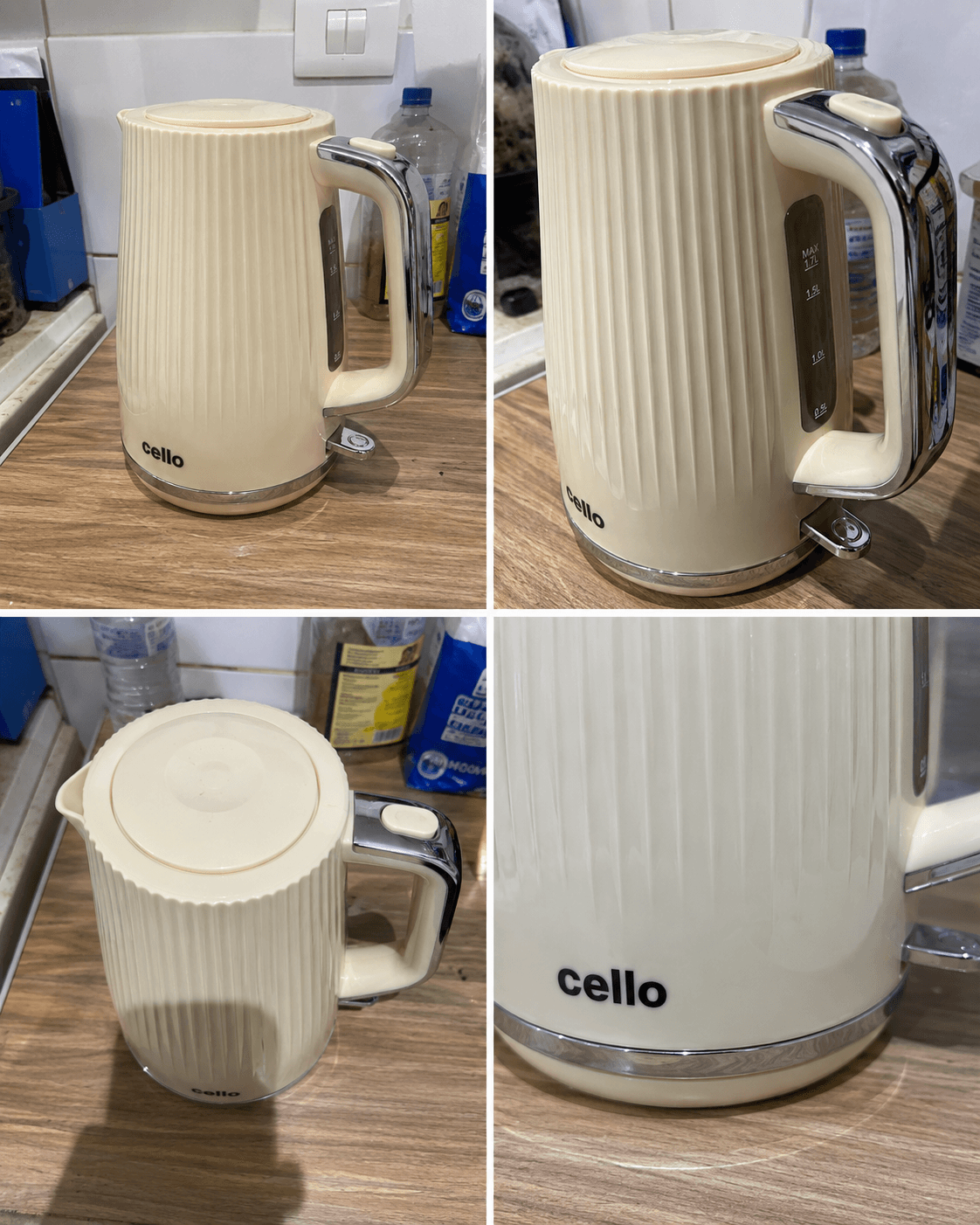
The starting point: a real phone photo
This was not a studio image. It was designed to replicate what many business owners might naturally do themselves: a quick phone capture in normal kitchen lighting, no specialist setup, no photography knowledge, no retouching.

Source image one
Quick phone capture in kitchen lighting. Flat chrome, uneven shadows and a distracting background.

Source image two
Same kettle, second angle. Colour shifts noticeably, the product loses separation, and the surface looks softer than it is in real life.
Both images are perfectly usable as a reference, but they also show the typical issues we see every day from brands sending in their own product shots:
What is going wrong in the phone shots
- Flat chrome reflections
- Uneven, directional kitchen lighting
- Colour inconsistency between shots
- Distracting background elements
- Weak product separation from the surface
- No commercial polish or finish
Why it matters for the AI step that follows
- AI inherits whatever the source image gets wrong
- Bad reflections become invented reflections
- Weak colour becomes drifting colour across SKUs
- Soft details become guessed details
- The product loses its physical truth before the scene is even built
For years, this is where professional photography would immediately take over. Now AI changes that workflow, and it is worth being honest about what it can already do.
What AI can already do very well
Using the original phone photo as a base, AI tools were able to remove the background, generate clean white-background packshots, improve the lighting, create lifestyle scenes, relight the product to match new environments, simulate studio-style imagery, and generate multiple compositions quickly.
The results were, honestly, impressive. And that is important to say openly. Many customers scrolling quickly through Amazon, Shopify or social media may not immediately notice the flaws in AI-generated imagery. For many businesses, AI imagery now crosses the “good enough” threshold visually. That is the major shift happening in ecommerce right now.

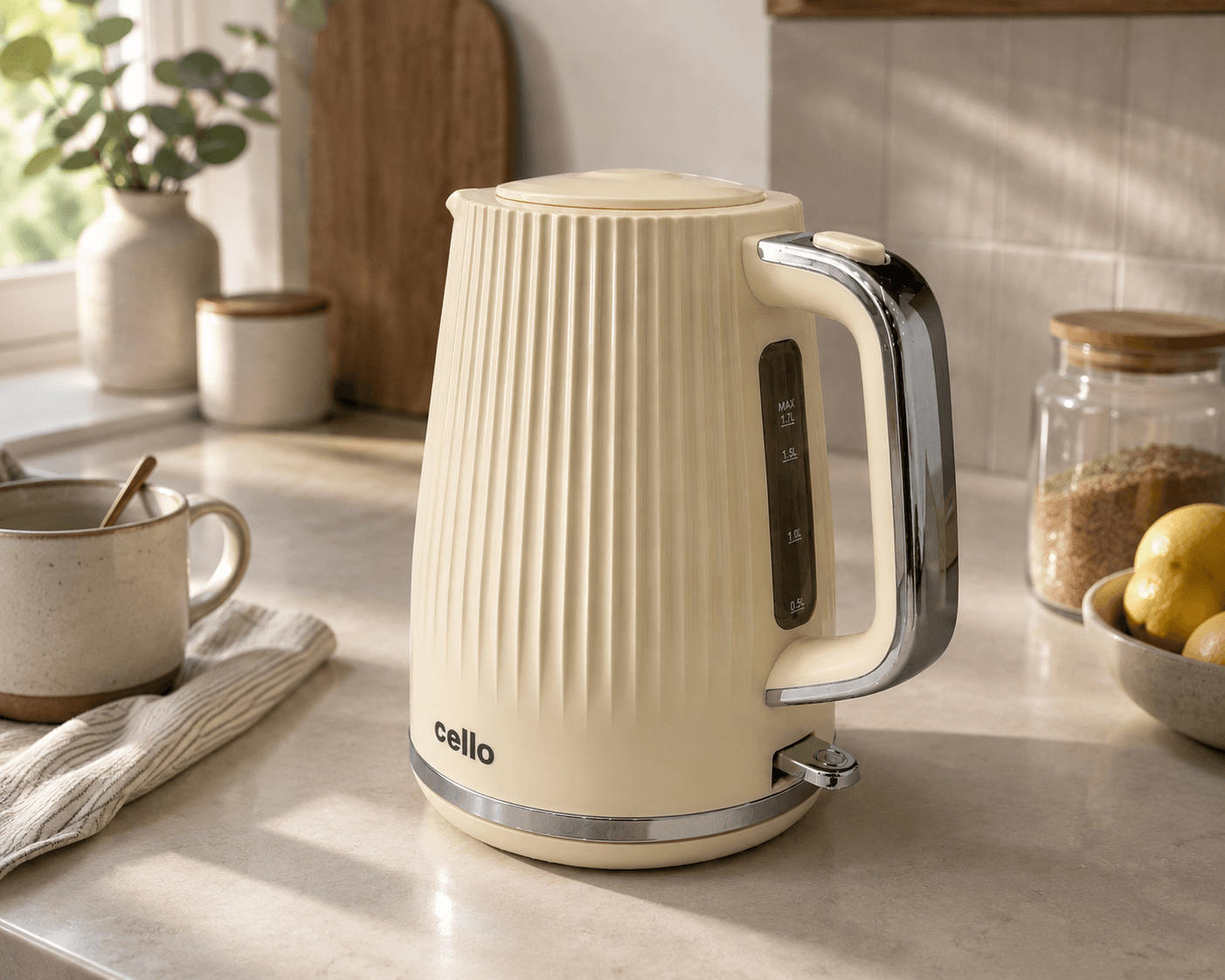
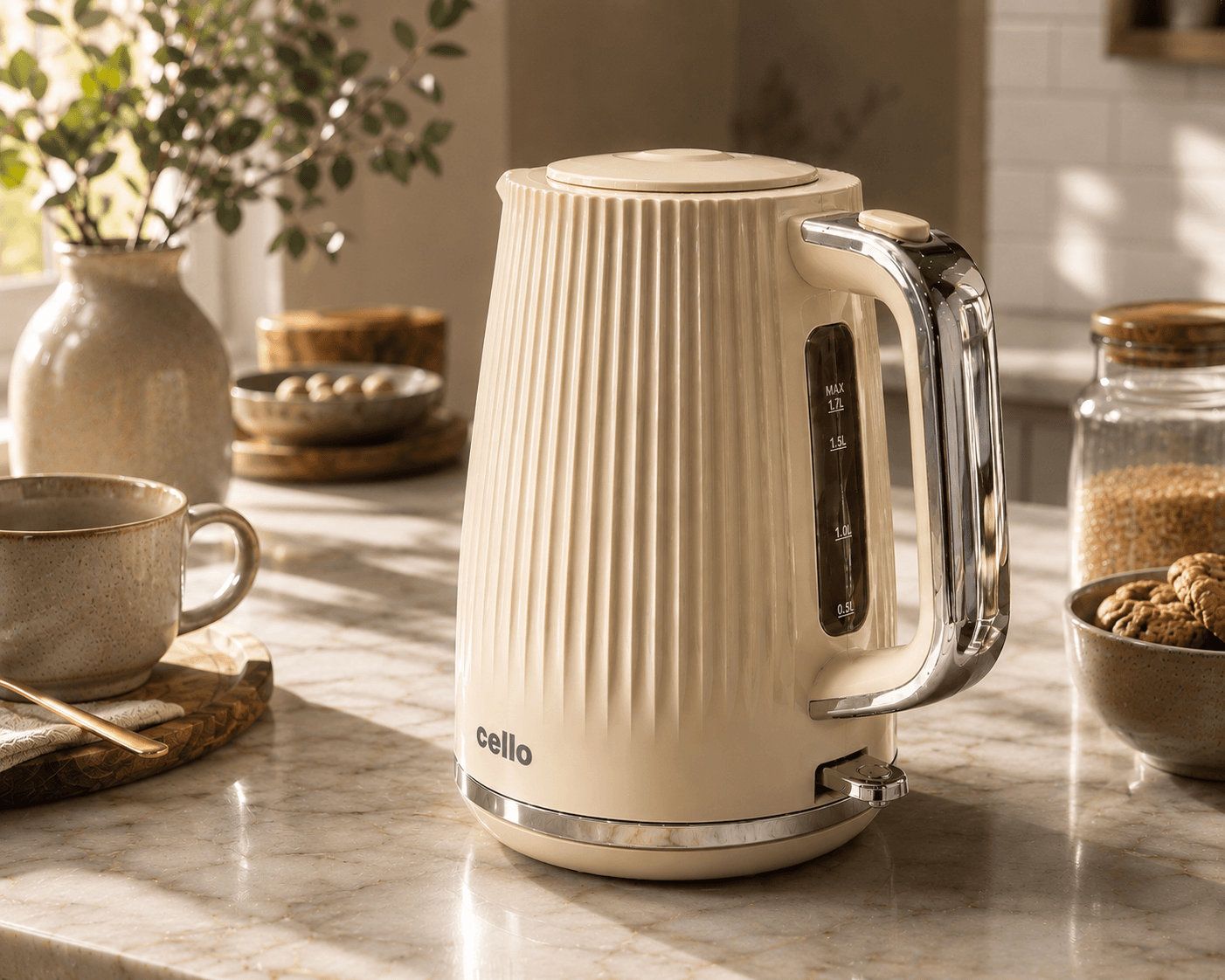
AI lifestyle from a phone photo
Generated from the two phone images above. At thumbnail scale it looks commercial. Look closer, and the kettle handle, spout and chrome reflections all start to drift away from the real product.
The honest answer in 2026 is that AI has crossed the surface-level good-enough line. The commercial battle has moved on to consistency, accuracy and trust.
From our studio testing
Why so much AI product imagery still feels “off”
One of the biggest issues we are seeing is that many AI-generated product images initially look impressive, but quickly start to feel inconsistent, artificial or commercially unreliable on closer inspection. It usually happens when the source photography is weak, prompts are too generic, lighting direction is unclear, reflections are physically inaccurate, the product itself is not anchored to real photography, or there is no clear creative vision behind the final outcome. With reflective categories like technology and electronics, chrome cookware and glass, the gap shows up almost immediately because the physics of the reflection rarely agrees with the scene around it.
AI is incredibly capable, but it still requires art direction, product photography knowledge, retouching expertise, an understanding of materials and light, and consistency control across a product range. Without that, many brands end up with imagery that looks visually interesting at first glance, but lacks the polish, trust and consistency needed for serious ecommerce use.
Who is actually judging the image?
For most small ecommerce brands, the historical threshold for “good enough” has been reasonably sharp images, a clean background, a recognisable product and a modern-looking scene. AI can already hit that threshold surprisingly well, which is exactly why so many brands have started experimenting with it.
The important distinction is who is judging the result. A non-photographer typically asks one question: “does this look nice?”. A retailer reviewer, marketplace QA team, experienced buyer or creative director notices something very different: inaccurate materials, inconsistent reflections, warped geometry, lighting mismatches, colour drift, inconsistent scale, products that change shape between angles, and fake surface behaviour. The gap between “looks good on Instagram” and “commercially reliable imagery” is exactly where professional photography still earns its place in 2026.
There is also a commercial trust dimension that AI-only workflows quietly create. AI-generated images can lead to compliance and customer-expectation issues when the product on the page no longer matches what the customer actually receives, which matters particularly for Amazon listings, retailer onboarding, crowdfunding pages, beauty, electronics and homeware. Returns go up, reviews soften, and reorders stall.
The biggest problem: consistency at scale
One AI image is easy now. The problem starts at scale. Forty matching SKUs that need consistent angles. Seasonal updates that have to look like the original campaign, not a re-roll. Packaging revisions where only one variant changes but all forty need to stay aligned. Marketplace specs. Retailer specs. Repeatability across reorders. Print use, where compression hides nothing. Uncontrolled AI workflows tend to collapse here, quietly, image by image, until the catalogue stops feeling joined up.
And all of that has to keep colour accuracy, product proportions, reflections, lighting direction, styling consistency and branding perfectly aligned. Individually the slips look minor. Collectively they read as a brand that does not quite have its imagery under control.
Where AI-only workflows tend to break down
Shape
Handles, spouts and details subtly change between images
Chrome
Reflections become inconsistent and physically wrong
Colour
The on-screen colour drifts away from the real product
Range
Consistency falls apart once the catalogue grows
In practice that shows up as a handle subtly changing shape between images, chrome reflections that no longer agree from one angle to the next, packaging proportions drifting, and colours moving away from the real product. That is the precise moment where customers stop clicking add to basket and reviewers start sending listings back.
The PMP studio version: an anchor of truth
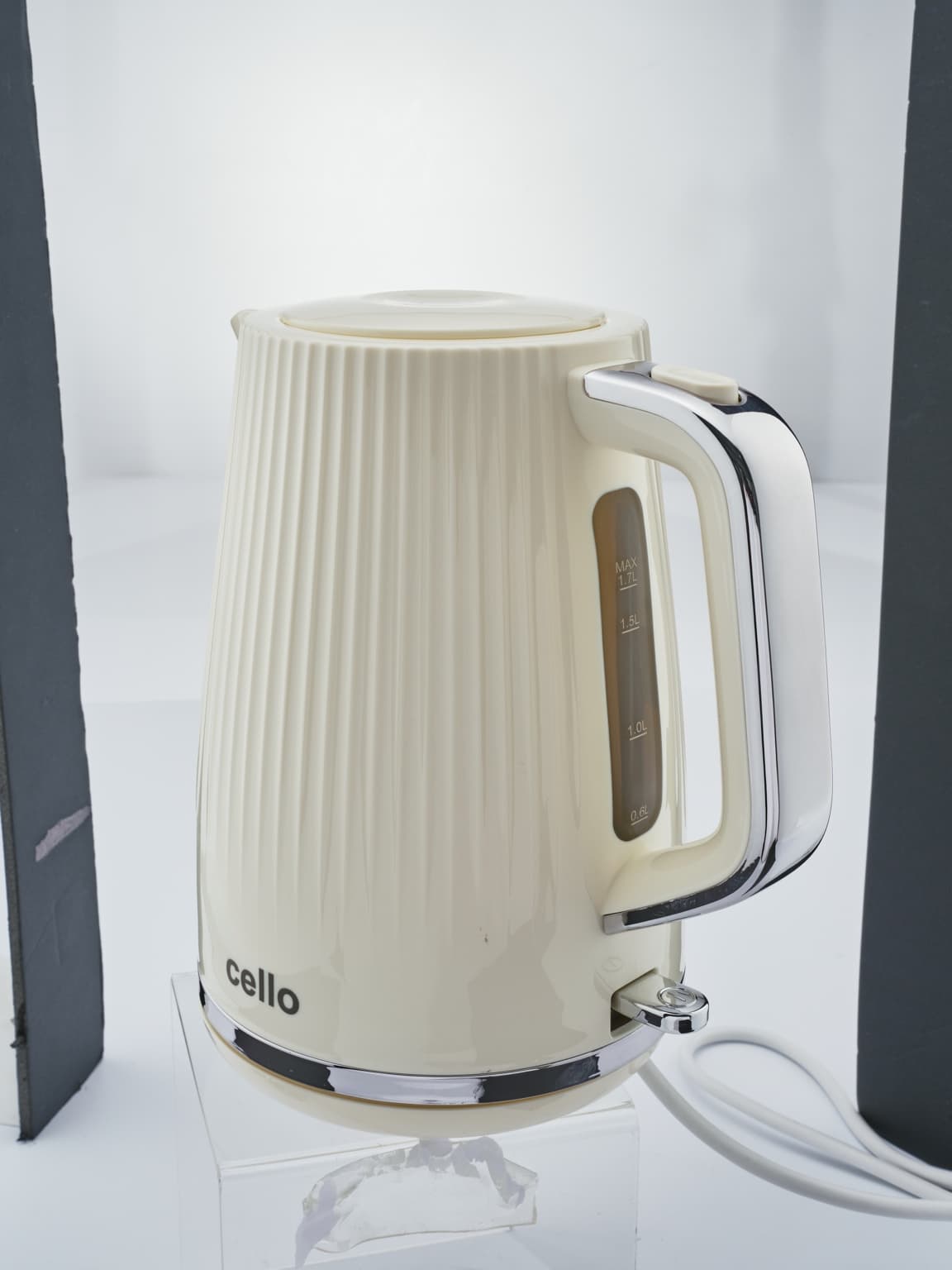
To set a real benchmark, we put the same cream kettle in front of our York studio lighting setup and shot it properly. No AI in this step. Just controlled lighting, correct angle, neutral white background, and a clean RAW capture.

Step one · PMP studio RAW
Controlled lighting, correct angle, neutral background. The reflections and chrome are physically accurate before we touch the file.

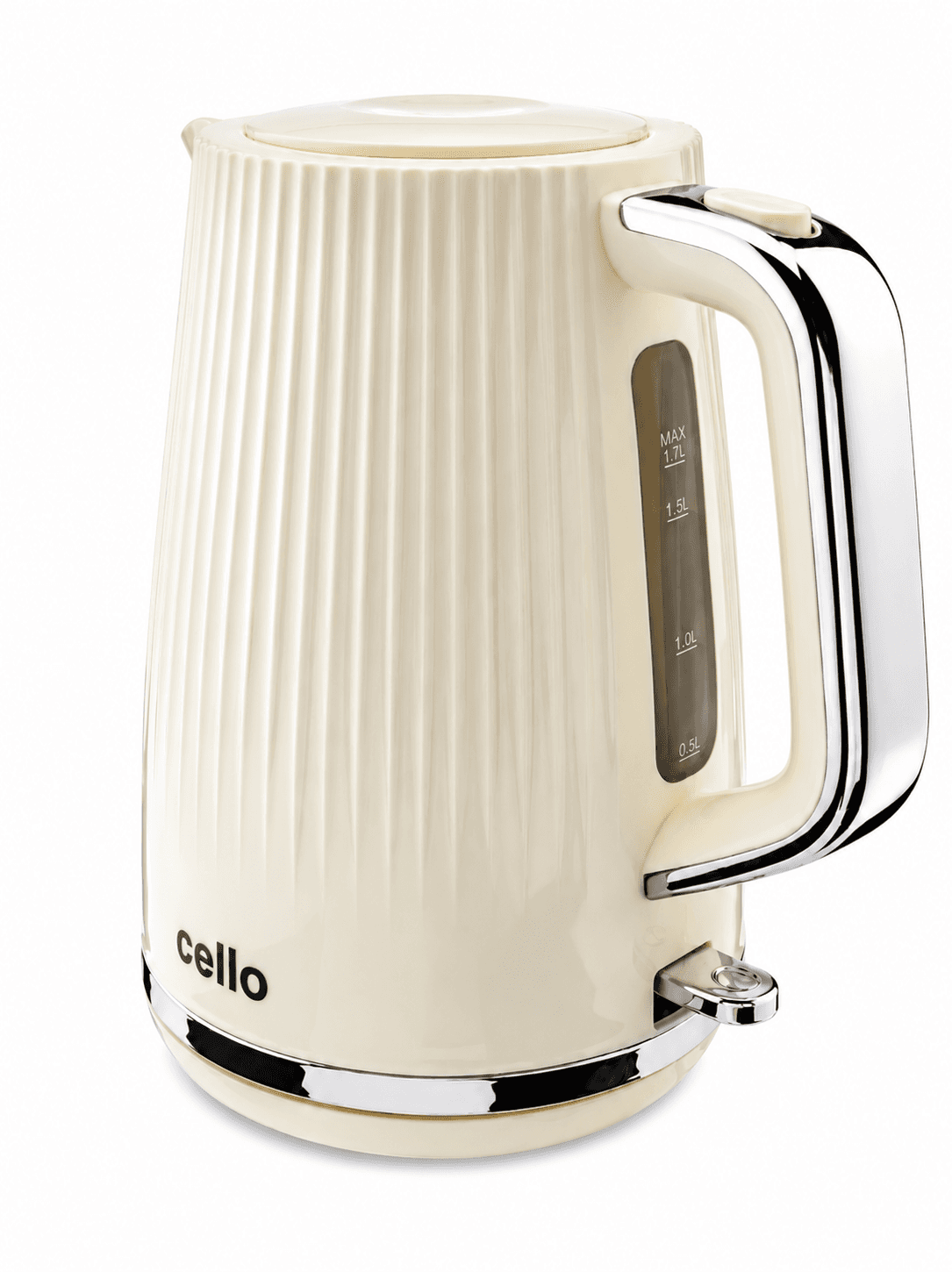
Step two · Final retouched packshot
Cleaned, colour-true and Amazon-compliant. This is the asset that becomes the anchor for every other image in the range.
The studio image is not just “a nicer photo”. It is the version of the product that every downstream image (hero, lifestyle, A+, social, retailer) can be built from with confidence. If you want to see how the retouch stage actually happens, our product retouching service page walks through what changes between RAW and final.
Side by side: the comparison
Putting the two routes next to each other is the clearest way to see where AI is already strong and where professional photography is still doing work AI cannot quite match.

AI route vs studio route
At first glance both images read as commercial. Look at the handle, the chrome ring, the way the kettle meets the surface, and the colour of the body. The small differences are what make one image trustworthy at zoom and one image weaker in a marketplace gallery.
Why professional photography still matters
AI has not removed the need for professional product photography. In many ways, it has made expertise more valuable.
AI still struggles with reflective surfaces, glossy materials, transparent products, colour accuracy, physically correct lighting, realistic shadows, consistency between images, and true-to-product detail reproduction.
That is exactly where professional photography still provides what we call the anchor of truth. The strongest results we are seeing in 2026 are not fully AI-generated. They are hybrid workflows combining real product photography, controlled lighting, professional retouching, AI-assisted background and environment generation, and commercial art direction.
The future is hybrid: real photography plus AI and DCL
We do not believe the future is “AI vs photographers”. We think the future is photographers using AI properly. The same cream kettle, shot once in the PMP studio and then dropped into a believable environment with our Digital Composite Lifestyle (DCL) service, produces a lifestyle image that holds up at zoom and stays consistent across the whole range.

Hybrid · Real studio capture + DCL scene
The kettle is the same photographed product as the packshot above. The scene, surface, lighting interaction and reflections are built around it. The product stays accurate. The look stays commercial. The whole range can be produced this way without losing consistency.
At PMP, we are actively building workflows that combine accurate real-world photography, AI-assisted lifestyle generation, advanced retouching, scalable ecommerce production, and commercially reliable image systems, because clients still need consistency, trust, accuracy, compliance and scalable visual branding.
We do not just take product photos. We build commercially reliable product imagery systems.
How PMP is positioning in 2026
That system includes professional product photography, AI-assisted lifestyle generation, retouching, consistency control, marketplace compliance, visual brand continuity and scalable asset production, all built around a single anchor capture of the real product. It is the level of control brands need once they are operating across a catalogue, not just publishing a single hero image.
That also makes the workflow noticeably faster. AI-assisted workflows let us deliver lifestyle imagery, seasonal variants and campaign extensions more quickly and more flexibly than traditional full-set productions when they are guided properly. The point of the studio capture is not to slow the process down. It is to make sure the faster, AI-assisted parts of the workflow stay anchored to a real product, so speed never comes at the expense of accuracy or consistency.
What the PMP hybrid workflow actually looks like
When a brand asks us to build their imagery this way, the process is deliberately ordered so that the real photography always carries the product truth, and AI is only ever used where it makes the output better, faster or more flexible.
Studio capture
The product is photographed properly in our York studio with controlled lighting. This becomes the anchor asset for everything that follows. See our packshot service for the technical detail.
Commercial retouch
Colour is matched to the real product, reflections are cleaned, edges are refined and the file is made marketplace-compliant. This is the version that every other image will be built from.
DCL scene build
The retouched product is dropped into a digitally built environment using a mix of real plates, compositing and AI-assisted background generation. Read how digital composite lifestyle photography works for the full breakdown.
Range consistency QA
Every image in the set is checked against the anchor packshot for colour, proportion, scale and lighting direction. This is the step that AI-only workflows almost always skip, and it is the difference between a striking one off and a believable catalogue.
Multi-platform delivery
The same anchor produces packshots, hero shots, lifestyle imagery, A+ modules, banners and social crops, all aligned to the same product truth.
The honest summary
AI is an incredible tool. But tools still require experience, vision and technical understanding to produce commercially strong results. The camera is still important. Understanding light, materials, reflections, branding and ecommerce psychology is becoming even more valuable.
The irony of 2026 is that AI is likely to reduce the value of average product photography, while sharply increasing the value of experienced photographers who understand how products, lighting, reflections, colour and ecommerce actually work together.
Where this leaves brands in 2026
If you only need one striking image for a deck or a social post, AI can probably get you there. If you are running a product catalogue, an Amazon storefront, a wholesale line sheet or a brand that customers will zoom in on, you almost certainly want a hybrid setup, not pure AI. That is where the strongest results we are producing in 2026 are coming from, and that is the conversation we keep having with brands every week.
If this sounds like the kind of imagery system you want, take a look at our Digital Composite Lifestyle service, our packshot photography, our lifestyle photography and our retouching service. You can also see pricing or send a brief and we will come back with a realistic plan.
For more context on how our thinking on this has developed, our piece on why the final image matters more than the route used to create it is a useful companion read, our hybrid product imagery guide walks through the production pipeline in detail, and our wider AI vs traditional photography guide goes deeper into the trade-offs.
FAQ: AI product photography vs professional photography in 2026
FAQ
Can AI replace professional product photography in 2026?
Not for serious ecommerce work. AI is now genuinely impressive at generating lifestyle scenes from a phone photo and crosses the visual good-enough threshold for casual scrolling. It still struggles with reflective surfaces, accurate colour, consistent product proportions across a full SKU range, packaging detail, and marketplace-grade compliance. The brands getting the strongest results in 2026 are not choosing AI or photography, they are running hybrid workflows that anchor everything to a real studio capture.
What is a hybrid AI and photography workflow?
A hybrid workflow uses a real, professionally photographed product as the anchor of truth, then uses AI and Digital Composite Lifestyle (DCL) techniques to build scenes, backgrounds and campaign variations around it. The product itself stays accurate (correct shape, reflections, colour and packaging), while atmosphere, environment and seasonal variation are produced faster and more flexibly than a full location shoot.
What does PMP mean by DCL (Digital Composite Lifestyle)?
DCL is our digital composite lifestyle service. We photograph the product properly in our York studio, retouch it to commercial standard, and then build the lifestyle environment around it digitally. That can include AI-assisted scenes, traditional compositing, or a combination of both. The product stays believable, while the brand gets the look of a full location shoot without paying for one every time.
Why does AI-generated product imagery often look inconsistent across a range?
Most AI tools regenerate the product slightly differently every time. Handles change shape, chrome reflections drift, packaging proportions shift, and colours move between images. One image can look excellent. Twenty matching SKUs is much harder. Hybrid workflows fix this because the product asset is photographed once and reused, so the only thing changing across the range is the scene around it.
Is AI product photography suitable for Amazon listings?
AI lifestyle and secondary imagery can work for Amazon when the main hero image is still a real, compliant studio photograph and AI is only used for context shots around it. Fully AI-generated main images are risky because Amazon expects an accurate representation of the actual product, and shoppers will zoom in on detail. We typically recommend real photography for hero and detail images, with hybrid or AI-assisted work for lifestyle and supporting slots.
How does PMP combine AI and professional photography?
We start every project with a real product shoot in our York studio so reflections, colour and shape are physically correct. From there our retouch team brings the asset to a commercial finish, and we use AI and DCL techniques to build matching lifestyle scenes, campaign variants and seasonal imagery. Everything stays consistent across the SKU range because it is all built on the same photographed product.