There is a version of Amazon imagery advice that gets repeated constantly: white background, product centred, no text overlays, job done. And that advice is not wrong. Those rules exist for good reason, and ignoring them means your listing either gets suppressed or never goes live at all.
But that view is too narrow. Treating compliance as the finish line is one of the most common mistakes we see from sellers who are putting genuine effort into their listings but not seeing the results they expected. The rules are the entry ticket. What happens after that determines whether your images actually help you sell.
This article is about that gap. Not the rules themselves, but what separates a compliant listing from one that genuinely performs.

The core idea
Meeting Amazon's image rules is the starting point, not the finish line.
A compliant image gets your listing accepted. A strong image set gets your product sold. The difference between the two is where most of the commercial value sits.
What Amazon compliance actually does
Let us start with what the rules are there for. Amazon's main image requirements exist to create a consistent shopping experience. When every listing follows the same visual standard, buyers can scan search results quickly and compare products on a level footing.
In plain terms, the main image needs a pure white background, the product should fill at least 85 per cent of the frame, there should be no text, badges or watermarks, and the image should be at least 1600 pixels on the longest side for zoom to work. The product needs to be shown accurately, without misleading angles or props. For a full breakdown, see our guide to Amazon image requirements.
Following these rules means your listing gets accepted and appears in search. That matters. But compliance is a threshold, not a performance indicator. A listing that passes every technical check can still look unremarkable.

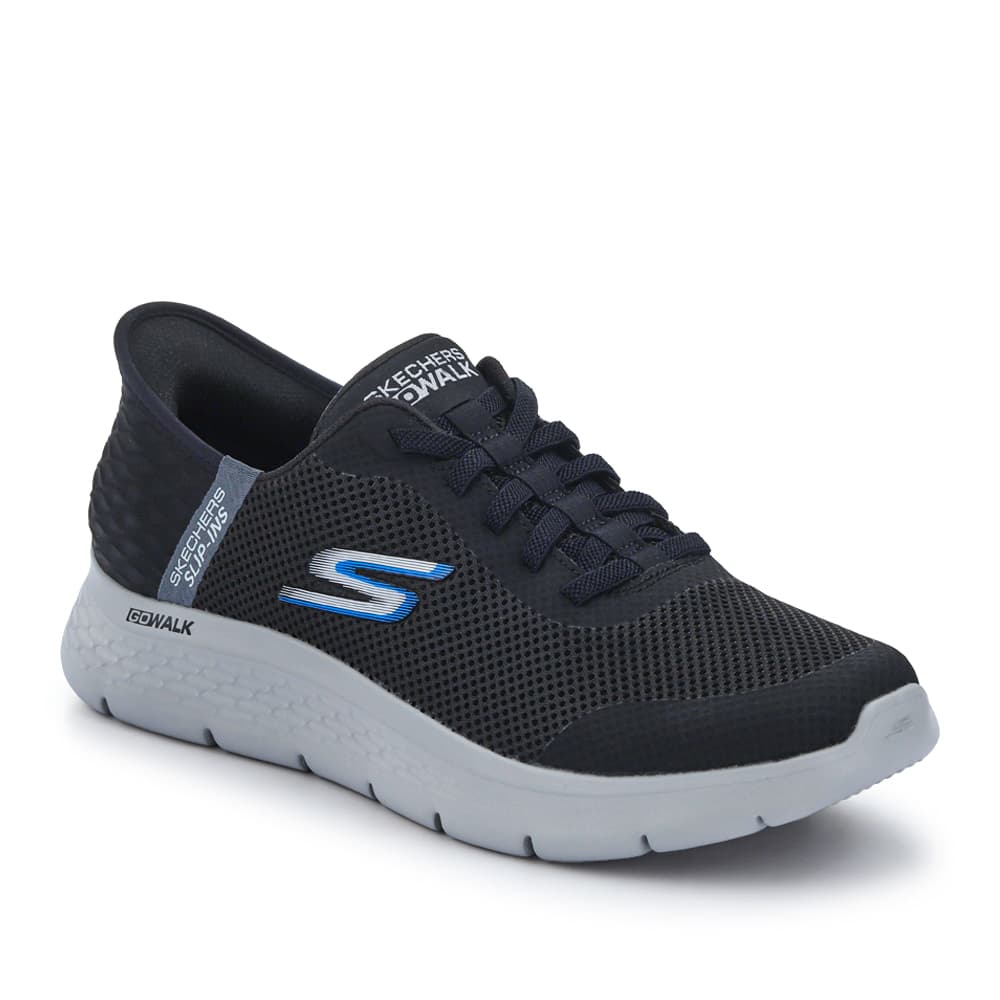
Compliant hero image
A clean, well-executed hero image on white. It meets every requirement, but this is the starting point, not the goal.
Why compliant does not automatically mean effective
This is the part that catches a lot of sellers out. You can have a main image that ticks every box on Amazon's checklist and still have an image that loses clicks. Poor framing, flat lighting, inaccurate colour or an angle that does not show the product at its best can all pass compliance while failing commercially.
The main image has two jobs. The first is compliance: getting the listing live and visible. The second is persuasion: making a shopper stop scrolling, click through, and start considering the purchase. Most sellers focus entirely on the first job and underestimate the second.
We see this regularly with brands that come to us after photographing their own products or using a generalist photographer. The images are technically correct but visually unremarkable. They do not stand out against competitors, and they do not give the buyer any reason to feel excited about what they are looking at.
Getting an Amazon image accepted is not the same thing as making it persuasive.
Claire, Creative Director
What buyers are trying to work out from Amazon images
Before a customer adds a product to their basket, they are running through a set of questions, often without realising it. Your image set needs to answer these clearly:
What is this product?
The hero image should make it obvious at a glance. No ambiguity, no guesswork.
Does it look trustworthy?
Clean photography signals professionalism. Sloppy images signal risk.
What quality should I expect?
Detail shots and close-ups communicate material quality, finish and craftsmanship.
What is included?
Packaging shots and what's-in-the-box images remove surprise and reduce returns.
How does it work?
In-use and contextual imagery helps buyers understand the product in practice.
What makes it different?
Infographics and comparison images highlight what sets the product apart.
Every unanswered question is a reason for the buyer to hesitate. And on Amazon, hesitation usually means they scroll to the next listing.
What a strong Amazon image set actually includes
Amazon allows up to nine images per listing, and the most effective sellers use all of them. Each slot should have a clear purpose.
Main image
Compliant hero on white. Clean, sharp, well-lit, with the product filling the frame at its most recognisable angle.
Secondary angles
Back, side and three-quarter views that give the buyer a complete picture of the product shape and design.
Detail close-ups
Texture, stitching, controls, labels, or finish. The details that communicate quality.
Packaging or included items
What arrives in the box. This reduces returns and sets clear expectations.
Scale or dimensions
Size reference, measurement overlays, or the product shown next to a familiar object.
In-use or contextual imagery
The product in a real or styled setting. This helps buyers imagine it in their life.
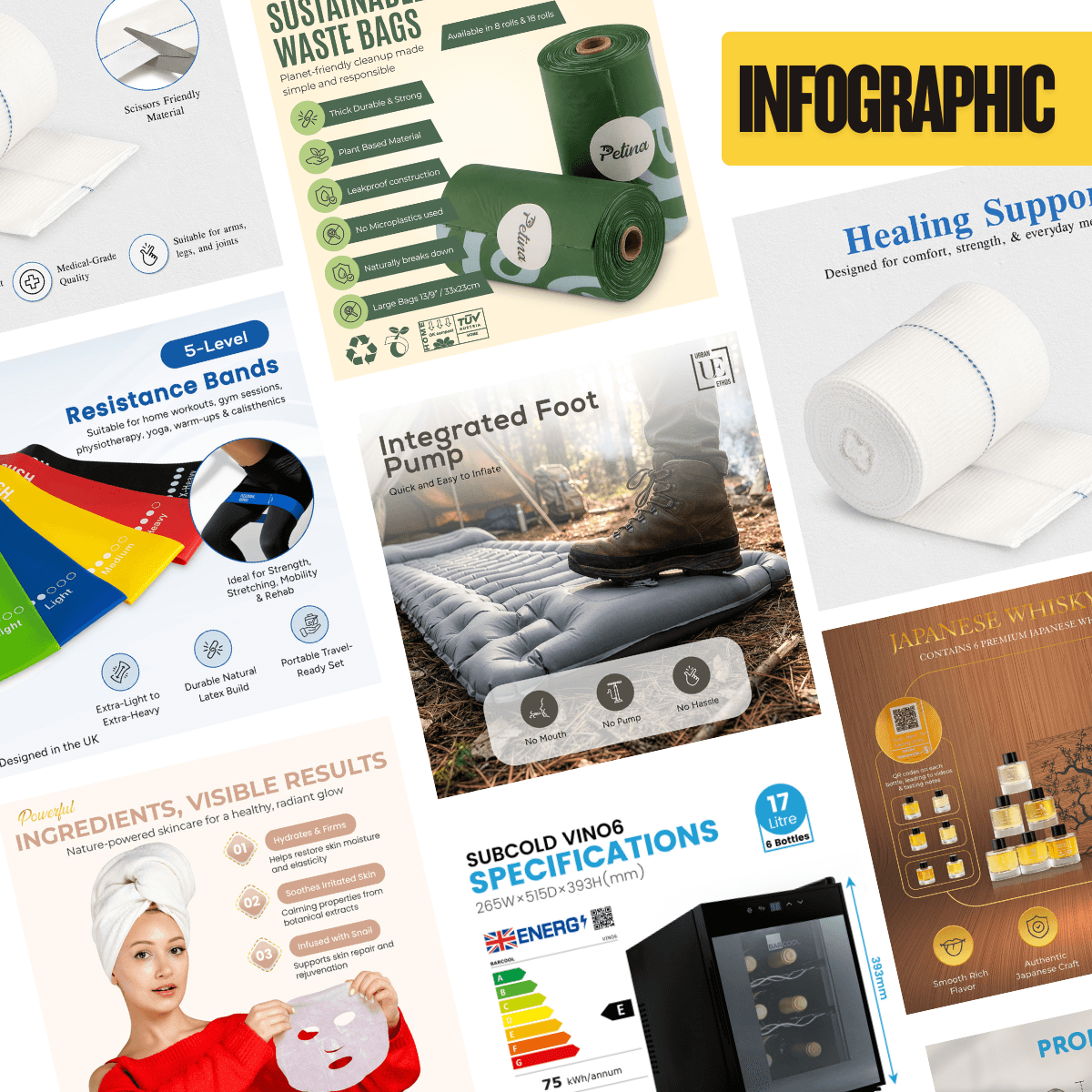
Infographics
Feature callouts, benefit highlights, or comparison panels. Useful for communicating things photography alone cannot show.
For more on product infographics and how they work alongside photography, see our infographics service page.

Complete listing set
A structured Amazon image set answers buyer questions before they are asked.
When every image in a listing has a clear job, the buyer moves from awareness to confidence without friction. The hero image gets the click. The supporting images close the sale.
This is what we mean by treating imagery as a system rather than a collection of individual shots. Each image supports the next, and together they answer the questions that would otherwise go to a competitor's listing.
Part of a complete Amazon image set from our studio. Hero, detail, infographic and lifestyle images working together as a system.
The gap between "accepted" and "effective"
There is a meaningful gap between a listing that Amazon accepts and a listing that performs well. We see it constantly: sellers with technically compliant imagery that looks generic, feels interchangeable, and does not give the buyer any particular reason to choose that product over the alternatives.
Better imagery does not just improve how the product looks. It improves how the product feels. When the photography is consistent, well-lit and clearly structured, it signals that the brand behind the product takes quality seriously. That perception matters, especially when the buyer is comparing five or six similar products side by side.
Brand consistency across variants and ranges matters too. If your hero images use different lighting styles, your infographics use different fonts, and your lifestyle shots feel disconnected, the listing as a whole looks assembled rather than planned.
| Approach | What it achieves | What it misses |
|---|---|---|
| Compliance only | Listing accepted and visible in search | Does not stand out, answer buyer questions, or build trust |
| Compliance + strategic planning | Stronger hero image, purposeful supporting shots, better click-through | May still lack infographics, lifestyle context or brand consistency |
| Full image system | Compliant, persuasive and structured. Answers all buyer questions. Consistent across the range. | Requires investment and planning, but delivers strongest commercial return |

Infographic example
A well-structured infographic from our studio. Feature callouts, dimensions and benefits communicated clearly alongside the product photography.
Common Amazon image mistakes
These are the patterns we see most often when reviewing listings that are underperforming despite having compliant imagery:
- Over-reliance on the hero image. Sellers put all their effort into the main image and leave the supporting slots underused or empty. The hero gets the click, but there is nothing behind it to close the sale.
- Not enough supporting images. Amazon gives you nine slots. If you are only using four or five, you are leaving buyer questions unanswered and giving competitors an advantage.
- Cluttered secondary images. Trying to say too much in a single image. Each supporting image should communicate one thing clearly.
- Weak or unclear infographics. Text that is too small to read, callouts that do not relate to the image, or graphics that look rushed. If the infographic does not add clarity, it adds noise.
- Inconsistent visual style. Different lighting, colour temperatures, angles and styling across the same range. This makes the brand look disorganised and undermines trust.
- Images that pass but do not perform. Technically compliant but visually flat. The product is there, but it does not look its best, and the listing feels forgettable.

Lifestyle context
Lifestyle imagery helps buyers connect with the product. On Amazon, it works best as a secondary image that adds context after the hero image has done its job.
Signs your Amazon images may be compliant but underperforming
Quick checklist
- Your main image looks technically correct but not compelling
- Buyers are asking questions that the images should already answer
- Supporting images feel inconsistent or generic
- Your product does not stand out clearly against similar listings
- The image set looks assembled rather than intentionally structured
- Your listing uses fewer than seven of the nine available image slots
- Infographics are hard to read on mobile or feel cluttered
If more than two of these apply, it is worth reviewing whether your imagery is working as hard as it could be. See our pricing page for Amazon photography packages.
What this means for Amazon sellers in 2026
The marketplace keeps getting more competitive. More sellers, more products, more noise. Shoppers are scrolling faster and making decisions in seconds. That means every element of your listing needs to earn its place, and imagery is the first thing they see.
Platforms like Amazon are also becoming more visually driven. Video, A+ content, and richer media formats are increasingly important. But they build on top of strong product photography, not as a substitute for it. If the core photography is weak, no amount of A+ content or video will fix the fundamentals. For more on enhanced content, read our guide to Amazon A+ Content.
The sellers who invest in structured, strategically planned image sets are the ones building resilience into their listings. They are not just passing the rules. They are giving themselves a genuine visual advantage over competitors who stopped at compliance.
A+ Content builds on strong listing imagery
When the core photography is strong, A+ Content gives you the space to tell a fuller brand story, compare products and answer objections before a shopper clicks away. We design every module to match your listing imagery so the whole page works as one system.
Up to 20% higher conversion
A+ listings consistently outperform standard text-only descriptions.
Brand story + comparison modules
Banners, feature grids, comparison charts and lifestyle blocks included.
Matched to your listing imagery
Hero images, infographics and A+ content designed as one cohesive set.
Trusted by 200+ Amazon sellers and e-commerce brands across the UK


A note from my experience
The sellers who tend to get the strongest results from their imagery are usually the ones who stop treating it as a checklist exercise. They come to us with questions like "what should each image be doing?" rather than "does this meet the rules?"
That shift in thinking makes a real difference. When you plan your image set around what the buyer needs to see, rather than what the platform requires you to show, the whole listing becomes more convincing. The compliance still gets handled, but it becomes the foundation rather than the ceiling.
We work with sellers at every stage, from people launching their first product on Amazon to established brands refreshing their entire catalogue. The approach is always the same: understand what the buyer needs to see, then create imagery that delivers it clearly and consistently.

From our studio
Every image in a listing should have a job.
When we plan an Amazon image set, every slot is accounted for before the product arrives in the studio. We know what the hero will show, which details need close-ups, where infographics will add value, and whether the listing needs lifestyle context or composite imagery.
That level of planning is what separates listings that look professional from listings that actually perform.
Detail shots from the same listing set. Each supporting image adds something the hero image cannot show alone.
Compliance gets you on the shelf. Good imagery helps you win there.
The rules exist for a reason, and following them is non-negotiable. But if your approach to Amazon imagery stops at compliance, you are leaving performance on the table.
The best Amazon listings do not just pass the test. They answer buyer questions, build trust, communicate quality, and create a visual experience that makes the product feel worth buying. That takes more than a white background and a centred product shot. It takes planning, consistency and photography that understands what the marketplace demands.
If you are looking to move beyond compliant-but-average imagery, we can help. Whether you need a single listing refreshed or a full catalogue shot from scratch, we create Amazon product photography that is designed to convert, not just comply.