0330 043 0113info@photographmyproduct.co.uk

★★★★★5.0 rating · 189+ reviews · UK studio

FAQClient Login
Photograph My Product - Professional UK Product Photography Studio
Services
Product Types
Our WorkAmazon PhotographyPricingBlog
Client LoginStart your estimateStart your estimate
Home/Blog/Why Professional Product Images Matter More Than Ever in E-commerce

In Focus

Business7 May 2026• 9 min read• From our York studio

Why Professional Product Images Matter More Than Ever in E-commerce

By Claire Fulleylove, Creative Director at Photograph My Product and former ecommerce buyer. Why product images are the first real conversation a brand has with a customer, what the data actually says, and how to make sure your imagery is doing its commercial job.

Why Professional Product Images Matter More Than Ever in E-commerce

When it comes to selling online, your product images are often the first real conversation your brand has with a potential customer. Before they read the description, check the ingredients, compare the dimensions or scroll through the reviews, they are looking at the images. In a busy ecommerce space, where customers can click away in seconds, professional product photography can be the difference between someone feeling confident enough to buy and moving on to a competitor.

I am Claire, Creative Director at Photograph My Product. Before that, I spent years on the other side of the table as an ecommerce buyer, deciding which products went onto digital shelves and which did not. Imagery was always one of the factors that decided it, and the way it works has only become more pronounced since.

The core idea

Online, your product images are not decoration. They are your shop window, your sales assistant and your first impression, all at once.

Customers cannot pick up the product, turn it over or feel the surface. Imagery is what stands behind the counter on a product page. The brands that treat it that way win.

What the data actually says about product photos online

The data point I keep coming back to is from a Field Agent study in March 2018, reported by eMarketer. 83% of US smartphone users said product images and photos were very or extremely influential to their digital purchase decisions. That alone would be enough to take imagery seriously. What makes the number stronger is the rest of the chart.

In the same study, Field Agent asked which features on a product detail page actually influence buying decisions. Photos came out on top, ahead of product descriptions and specifications, ahead of customer reviews, ahead of star ratings and ahead of every other element on the page. Video was eighth from the top. Photos were first.

The numbers behind the case

83%

found product photos influential

Field Agent, March 2018, via eMarketer.

#1

ranked feature on a product page

Ahead of descriptions, reviews and ratings.

60%

needed three or four images

Salsify, February 2018, via eMarketer.

Field Agent, March 2018

Product detail page features that influence US smartphone shoppers’ digital purchase decisions

Share of respondents who said each PDP feature was very or extremely influential. Product photos rank ahead of every other element on the page.

Product images / photos83%
Product descriptions / specs82%
Product reviews (from customers)75%
Star ratings64%
Comparison charts45%
FAQs45%
Product video36%
Product recommendations33%

Note: n=2,071 ages 18+. “Very” and “extremely” influential responses combined. Source: Field Agent, “The Digital Shopper: Insights into Today’s Most Connected Customers,” March 2018, via eMarketer.

That order matters. It tells you that customers do not put imagery somewhere underneath the “real” decision-making information. They put it on top of it. A shopper will look at the photo before they read the description, before they scroll the reviews, before they check the star rating. If the photo does not earn the next second of attention, none of the rest of the page gets a chance to do its job.

The same article quoted a Salsify survey from February 2018. 60% of US digital shoppers said they needed an average of three or four images to make a buying decision, and another 13% said they needed five or more. Almost a third preferred a standard product image, and 29% preferred a 360 degree view. In other words, customers are not satisfied with one hero image. They want a small set, and they expect each image to show them something different.

How many images shoppers want

Most online shoppers want at least three or four images per product

Share of US digital shoppers and the number of product images they said they needed to make a purchase decision.

  • 3 to 4 images60%
  • 5 or more images13%

Source: Salsify, February 2018, via eMarketer.

These figures are a few years old, but every brand we work with sees the same pattern in their own analytics. Listings with thoughtful, complete image sets convert. Listings with one good image and four weak ones do not.

What I learned in buying meetings

When I was buying for ecommerce, imagery was assessed in the same glance as price and review count. If a listing did not look credible inside the first second, it did not earn space on the page. That was not a decision about taste. It was a decision about confidence. If I, as a buyer, was hesitating, the customer was going to hesitate too.

The questions I was asking on a buyer’s screen were the same questions a customer asks at home. What is this exactly? How big is it? What is it made of? What comes in the box? Will it look like this when it arrives? If the imagery answered those questions clearly, the listing felt safe. If it did not, no amount of clever copy would rescue it.

Clean professional packshot of a Mini Vanilla Vodka bottle on a white background showing true colour and label detail

Clarity earns the click

A clean packshot answers the most basic question: what exactly am I getting?

A clean packshot is the foundation of any product page. It shows the product clearly, with accurate colour and proportion, and it gives the customer the basic visual information they need before they look at anything else.

On marketplaces like Amazon, a compliant white-background hero image is a rule, not a recommendation. On your own site, it is still the image that earns the click into the product page. Get this wrong and the rest of the image set rarely gets seen.

A well-produced drinks packshot. Accurate lighting, true colour, sharp label detail and a clear view of the bottle. The craft is invisible in the final image, which is the point.

What “professional” actually means here

Professional product photography is often described as making something look beautiful. That is part of it, but it is not the most useful definition. The way I describe it to clients is this: professional means the image is more useful, more trustworthy and more consistent than the alternative. It shows the product accurately, it sits properly inside a listing, and it looks like it belongs to the same family as every other image in your range.

That covers a few specific things in practice. Lighting that flatters the product without lying about it. Colour that matches what arrives in the box. Scale and proportion that are accurate. Cropping and resolution that work for marketplace pixel rules and mobile viewing. And a planned set of supporting images that answer the questions customers have before they ask them.

The job each image type does

Different image types do different commercial work. The brands that get the strongest results think about an image set as a system, not a series of one-off shots.

Clean white packshots

The hero image and core supporting angles. Built for product pages and marketplace compliance, and the reference for everything else in the set.

Detail close-ups

Texture, finish, materials, brand marks, stitching, engraving. These shots answer the quality question that a full product image cannot.

Lifestyle and in-use

Helps a customer picture the product in their own life. Provides scale, context and emotional pull. Often the image that turns a browser into a buyer.

Infographics and feature callouts

Especially important on Amazon and on PDP modules. Communicates USPs at a glance, which matters most on mobile and in busy category pages.

Range and group shots

Builds catalogue cohesion. When every product in a range looks like it belongs together, the brand reads as more considered and more trustworthy.

Scale references

In hand, on a worktop, next to a known object. The fastest way to settle the most common returns question before the customer even hits buy.

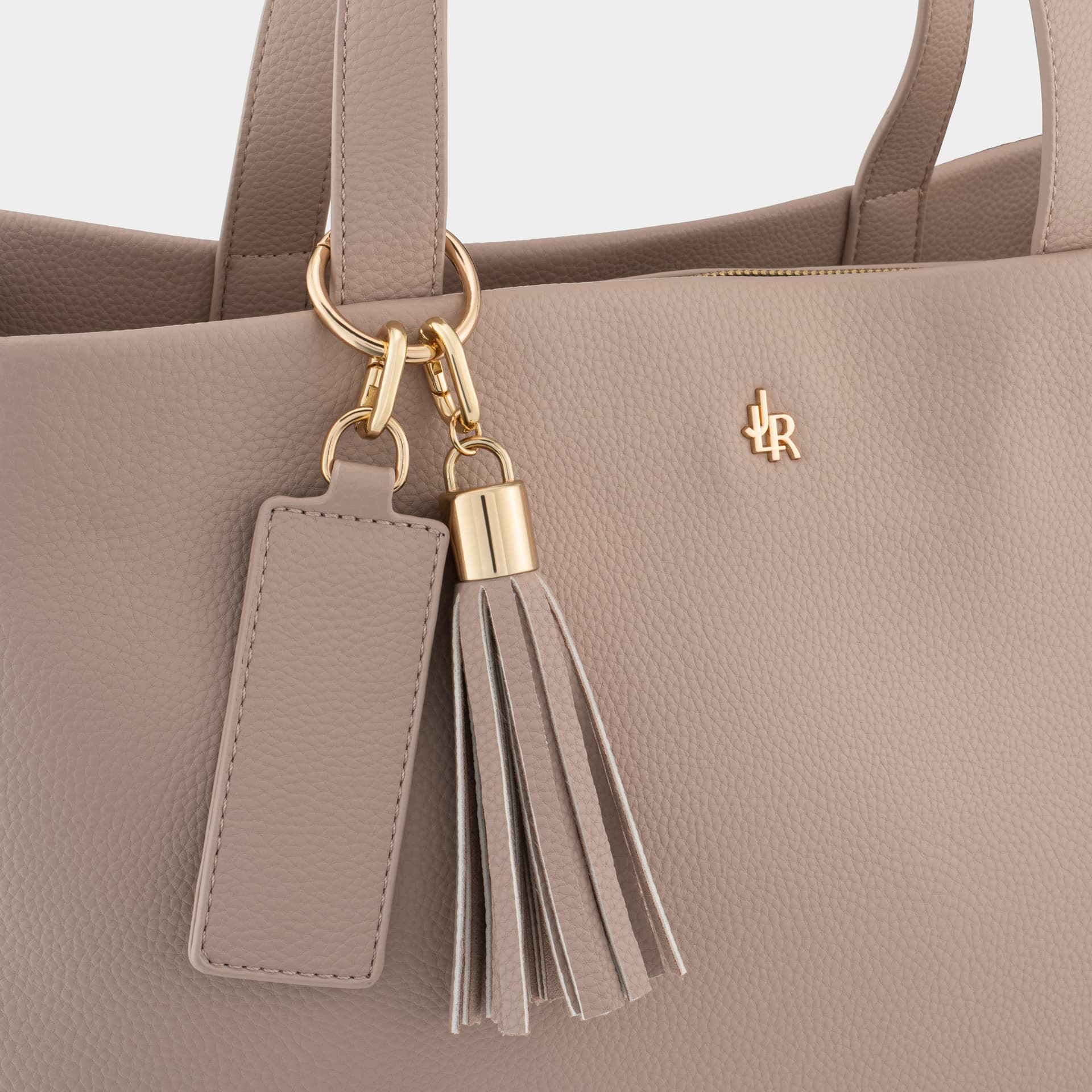
Close-up product photography of a bag showing stitching, hardware and surface texture

Detail builds confidence

Detail close-ups answer the questions a full product image cannot. Stitching, hardware, materials and finish all read as quality cues. Customers cannot pick the product up, so the image has to do that work for them.

Why customers need more images than brands usually publish

The Salsify number is the one I would put in front of any founder still relying on a single hero image. 60% of online shoppers want at least three or four images, and 13% want five or more. That is the floor, not the ceiling. The practical version of this is simple. For each product, plan for a clean main packshot, two or three supporting angles, at least one detail close-up, a scale or in-use shot, and a lifestyle image where it adds context.

That is the minimum image set I would brief on any new ecommerce launch. If you can add a top-down view, a back of pack shot, or an open-and-empty shot for sets and bundles, even better. The goal is to give customers enough information that they do not need to ask a question.

Customers cannot pick up the product, turn it over, feel the surface or compare it in person. Your images have to do that work for them.

Claire, Creative Director and former ecommerce buyer

What weak imagery actually costs

Weak product imagery rarely shows up as a single line on a spreadsheet, but its effects do. There is hesitation at the point of purchase, where carts get loaded but not checked out. There are abandoned baskets where the customer goes back to a competitor with a clearer image set. There are returns where the customer says the product looked different in person, which is almost always an imagery problem rather than a product problem. And there is brand damage, slow and quiet, when a catalogue looks inconsistent across a range.

I have worked with brands who came to us with beautifully styled imagery that was not converting well. In most cases, the photography itself was not the problem. The problem was that the images were not giving customers enough information to feel safe committing. They looked great, and they did not remove doubt.

Practical principles for stronger ecommerce imagery

When we plan a shoot with a brand, the conversation starts with the customer, not with the product. What does a buyer need to see to feel confident? What questions will they have? What would make them hesitate? Once you start there, the decisions about lighting, angles, styling and post all follow.

Principles I use on every ecommerce brief

✓

Plan the image set per SKU before the shoot. Decide what questions each image is there to answer.

✓

Standardise crops, lighting and white balance across the range so the catalogue feels cohesive.

✓

Use detail and lifestyle to answer specific buyer questions, not just to look attractive.

✓

Think mobile first. Most ecommerce browsing happens on a phone, and most product images are first seen at a fraction of full size.

✓

Make sure colour and finish are accurate. Returns from “the photo did not match” are an imagery problem, not a fulfilment problem.

✓

Treat infographics as part of the image set on Amazon and PDPs, not as an afterthought.

What this means for ecommerce and Amazon brands

On your own website, strong imagery supports every stage of the buying journey. On a category page, it earns the click. On a product page, it removes doubt. Across the range, it tells the customer that this is a brand that pays attention.

For Amazon sellers, the stakes are higher. Customers are comparing your listing against direct competitors in the same scroll, often on a mobile screen. The image set has to communicate fast and look credible at a glance. A compliant hero image, clear supporting angles, useful infographics and a believable lifestyle image give your listing the best chance of converting. If you want to dig deeper into the rules and what they mean in 2026, our Amazon image requirements guide covers the full spec.

Tutu Lash Aphrodite beauty product packshot on a clean white background, ready for Amazon and ecommerce listings

Marketplace ready

A clean, accurate packshot is the floor for any Amazon or ecommerce listing. Once that is right, the rest of the image set, the supporting angles, infographics and lifestyle, has a stable base to work from.

Why consistency across a range is its own trust signal

One of the patterns I see most often, on both ecommerce sites and Amazon, is a catalogue where each product was shot at a different time, with different lighting, against a different background. Even if every single image is technically good, the range as a whole feels disjointed. Customers pick up on that immediately, even if they could not put it into words.

Cohesive imagery across a range tells the customer that this is a brand that takes itself seriously. It also makes the brand easier to recognise across category pages, search results, paid ads and social. None of that requires expensive photography. It requires a plan that the studio can repeat every time.

IBD beauty product range photographed as a group with consistent lighting, background and styling for a cohesive ecommerce catalogue

Consistency across the range

When every product in a range is photographed with matching lighting, angles and styling, the catalogue feels like one brand. That cohesion is its own trust signal.

What strong product photography is really doing for you

Good product photography shows the shape, finish, texture, scale, packaging and key details of a product. Lifestyle images help customers imagine the product in use. Detail shots answer the practical questions. Amazon-ready images and infographics highlight key selling points quickly, especially for customers browsing on mobile. Together, this is the image set that gives a customer enough information to feel confident pressing buy.

At Photograph My Product, we work with brands to create clean, sharp, professional product imagery for websites, Amazon listings, social media and marketing campaigns. From white background packshots to lifestyle photography, detail images and ecommerce content, our focus is on helping products look credible, consistent and ready to sell online. If you want to read more on why imagery is really a trust mechanism rather than a finishing touch, I wrote about that here.

Planning your next product photography project?

Send us your product list, your launch date and a rough idea of where the images will live. We will come back with a clear plan, a recommendation on the right image set, and a quote. You can also see our pricing to get a sense of costs first.

Share your briefPackshot photographyAmazon photography

Frequently asked questions

Why does product photography matter so much for ecommerce sales?
Online, customers cannot pick up the product, feel the surface or compare it in person. Your images have to do that work for them. Strong product photography helps customers understand the product, judge the quality, trust the brand and feel confident enough to buy. Weak imagery creates doubt, and doubt is where online sales are lost.
How do product images compare with other things on a product page?
Photos sit at the top of the list. In a Field Agent study from March 2018 reported by eMarketer, 83% of US smartphone users said product images were very or extremely influential to their purchase decisions, ahead of product descriptions (82%), customer reviews (75%), star ratings (64%), comparison charts (45%), FAQs (45%), product video (36%) and product recommendations (33%). Imagery is the first thing shoppers respond to and the most influential element on the page.
How many product images should I have on each listing?
Most online shoppers want at least three or four images per product, and a meaningful share want five or more. A 2018 Salsify survey reported by eMarketer found that 60% of US digital shoppers needed an average of three or four images, with another 13% needing five or more. As a working minimum I would recommend a clean main packshot, two or three supporting angles, at least one detail close-up, a scale or in-use shot, and a lifestyle image where it adds context.
What does professional product photography actually include?
It is more than a clean image on white. Professional product photography includes consistent lighting and colour across a range, accurate scale and proportion, true-to-life finish and texture, marketplace-compliant cropping and resolution, and a planned set of supporting images that answer the questions customers have before they buy. It should make a product feel useful and trustworthy on screen, not only attractive.
Does this matter as much for Amazon as for my own website?
If anything, more. On Amazon, customers are comparing your listing against direct competitors in the same scroll. The image set has to work harder, communicate faster and look credible at a glance. A compliant white-background hero image is only the start. Strong supporting angles, infographic callouts and a believable lifestyle image are what separates a listing that converts from one that does not.
I have decent images already. How do I tell if they are doing the job?
Look for the symptoms first. Customers asking questions your images should already answer, returns where buyers say the product looked different in person, inconsistent lighting or styling across your range, and listings that look less credible than competitors are all signs. If any of those feel familiar, the imagery is creating doubt rather than removing it, even if it looks polished on the surface.

Source

eMarketer, “For Online Shoppers, Photos Can Influence a Purchase”, reporting on a Field Agent survey from March 2018 and a Salsify survey from February 2018.

Ask us anything

Get instant answers about our product photography services

Popular questions

Answers generated from our FAQ content

Need packshot photography?

See how we handle packshot shoots, pricing, and turnaround.

View our packshot service
Share this article

Planning a shoot?

If you already have a product list, a launch date, or even a rough brief, send it over. We can usually tell you quite quickly what is realistic, what can wait, and what will make the biggest difference first.

Share your brief

Related Articles

Why Product Imagery Is Really About Buyer Trust, Not Just Looking Good
Business

Why Product Imagery Is Really About Buyer Trust, Not Just Looking Good

Packshot vs Lifestyle Product Photography: Which Is Right for Your Product?
Photography

Packshot vs Lifestyle Product Photography: Which Is Right for Your Product?

Amazon Images in 2026: Compliance Is Only the Starting Point
Amazon

Amazon Images in 2026: Compliance Is Only the Starting Point

Newsletter

Better product images, every month.

Honest, low-volume advice on planning shoots, prepping products, and getting more from your imagery. No sales pitches.

One short email a month. Unsubscribe any time. We never share your address.

Photograph My Product logo

Product photography from our York studio for brands that need clear, consistent imagery across ecommerce, Amazon, campaigns, and launch content.

0330 043 0113info@photographmyproduct.co.uk
Unit E1, Northminster Business Park
Upper Poppleton, York YO26 6QU

Services

  • Packshots
  • Amazon Photography
  • Lifestyle
  • Infographics
  • Ghost Mannequin
  • Digital Composite
  • Hero Images
  • eCommerce Packages
  • Flat Lay
  • Clothing

Categories

  • Jewellery
  • Beauty
  • Food & Drink
  • Technology
  • Watches
  • Bags
  • Shoes
  • Automotive
  • Health & Wellness
  • Hardware

Company

  • Product Photography UK
  • Pricing
  • Brochures
  • Blog
  • FAQ
  • About Us
  • Reviews
  • Terms
  • Privacy

Have a project in mind?

Send over your product list or rough brief and we'll point you in the right direction.

Share your brief
★5.0 Google
189+ Reviews

© 2026 Photograph My Product Ltd.

•

VAT: GB307142144

•

Company No: 11588835

Open:Mon to Fri, 9am to 5pm